
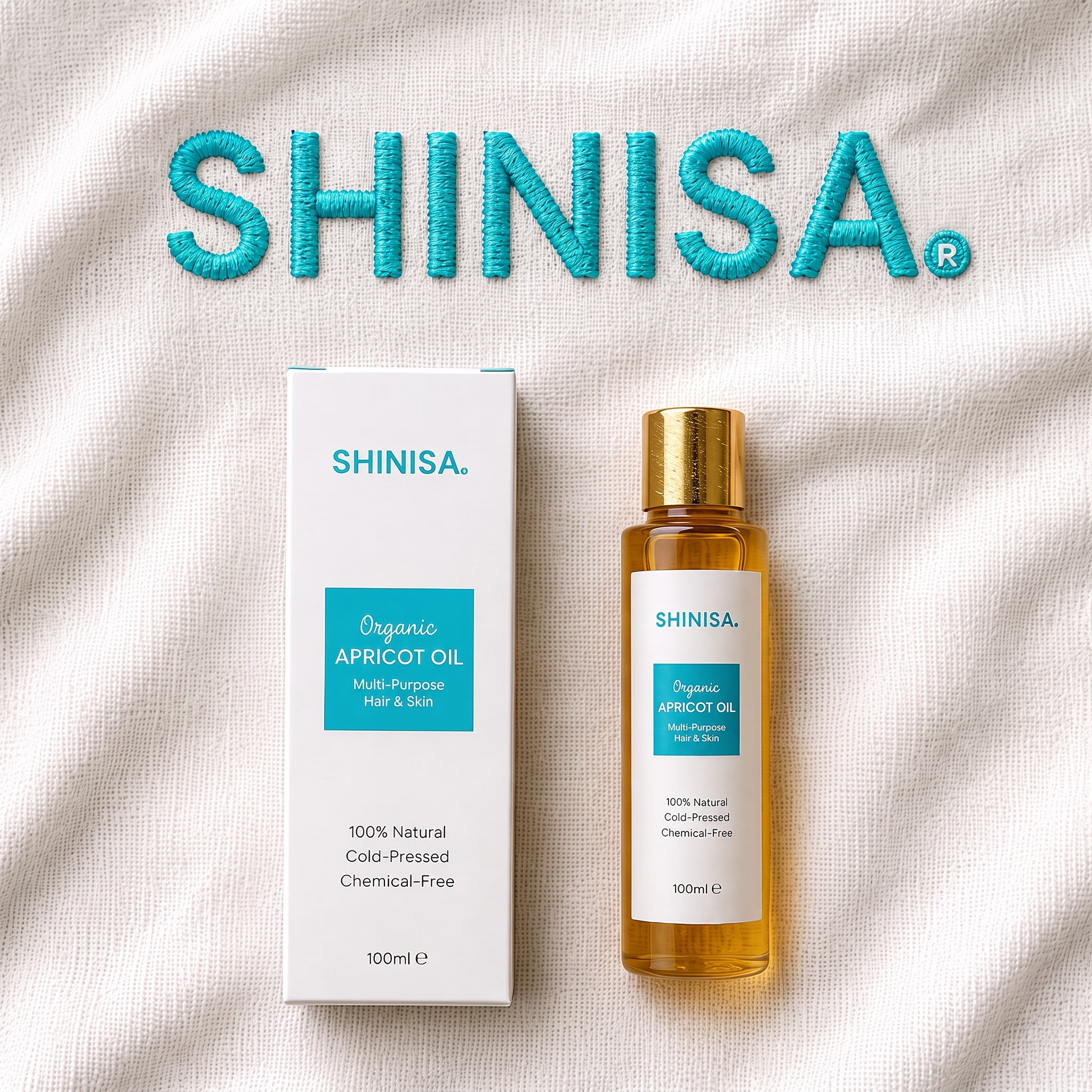
Your Friday Guide to Naturally Better Skin and Hair
Starting today, Shinisa is publishing something new every Friday: short, honest, useful reads about the organic oils we make, the ingredients behind them, and how people actually use them in their weekly self-care routines.
No exaggerated claims. No miracle promises. Just clear information about what cold-pressed, organic oils are, how they’re traditionally used, and how Shinisa sources and prepares them, so you can make an informed choice for your skin and hair.
This week, we’re kicking things off with the two oils most people ask us about first: Organic Apricot Oil and Organic Walnut Oil.
Why We’re Starting This Journal
A lot of skincare and haircare content online is either overly technical or overly promotional. We wanted a middle ground, a weekly space where we:
- Explain one or two ingredients in plain language
- Share how they’re traditionally and commonly used
- Answer the real questions people send us on Instagram and WhatsApp
- Point you to trustworthy, independent health resources when relevant
- Occasionally spotlight the people and communities behind our products
If you want the full deep-dive on any topic, we’ll always link back to our detailed guides, starting with our Organic Apricot Oil & Walnut Oil Guide.
This Week’s Focus: Apricot Oil and Walnut Oil, Side by Side
Both oils are cold-pressed and both come from kernels/nuts rather than seeds, but they tend to suit slightly different routines.
| Organic Apricot Oil | Organic Walnut Oil | |
|---|---|---|
| Texture | Light, fast-absorbing | Slightly richer |
| Common use | Face, beard, cuticles | Scalp, dry patches, body |
| Best for | Daily lightweight moisture | Deeper, occasional nourishment |
| Scent | Mild, nutty | Warm, earthy |
Many people in our community actually use both, apricot oil in the morning under makeup or sunscreen, and walnut oil at night as a heavier treatment.
Quick Answers (For People in a Hurry)
Can I use apricot and walnut oil together? Yes. They’re commonly layered, apricot oil first for a lighter finish, walnut oil on top or on alternate days for extra nourishment.
Which one is better for oily skin? Apricot oil’s lighter texture is generally preferred for oily or combination skin, though everyone’s skin responds differently, patch-testing is always a good idea.
Do I need to refrigerate these oils? No. Store both away from direct sunlight and heat, tightly capped, and they’ll keep well.
Is either oil suitable for sensitive scalps? Both are used in scalp care, but if you have a diagnosed skin condition, it’s best to check with a dermatologist before introducing any new oil.
A Note on How We Source
Shinisa’s oils are produced using cold-pressing, a method chosen specifically to avoid unnecessary heat processing. We work with small-batch producers, including women-led craftspeople, as part of our broader commitment to community-based, sustainable production, something we’ll talk more about in a future Friday post.
What’s Coming Next in This Series
We’re planning upcoming Journal entries on:
- A closer look at Onion Oil and hair growth routines
- How to build a simple 3-step natural skincare routine
- Apricnut Hair Oil: what’s actually in the blend
- Reader-submitted skin and hair questions, answered
- Behind the scenes: how Shinisa oils are made
If there’s a topic or product you want us to cover, message us on Instagram or WhatsApp, we read everything.
Explore This Week’s Featured Products
Frequently Asked Questions
What is the Shinisa Journal?
A weekly Friday post from Shinisa covering organic oils, skincare and haircare basics, and behind-the-scenes stories from our sourcing and production process.
Where can I read the full apricot and walnut oil guide?
Our complete guide is available here: Organic Apricot Oil & Walnut Oil Guide.
How often will new posts be published?
Every Friday, covering a mix of ingredient spotlights, routines, and reader questions.
Are Shinisa oils tested or reviewed by dermatologists?
Shinisa oils are prepared using cold-pressing with a focus on minimal processing. For advice on specific skin conditions, we always recommend consulting a licensed dermatologist.
Trusted External Resources
For general, independent information on skincare ingredients:
- World Health Organization – https://www.who.int/
- American Academy of Dermatology – https://www.aad.org/
- MedlinePlus – https://medlineplus.gov/
These organizations do not endorse Shinisa or its products; they are shared for general education only.
Closing
Thanks for being here for week one. Every Friday from here on, expect something short, useful, and honest about natural skin and hair care, starting with the oils you already know, and expanding from there.
Shop this week’s featured products: https://shinisa.com/shop you can use our shop on daraz